Kinkajou Facts: The Honey Bear That Is Not a Monkey at All
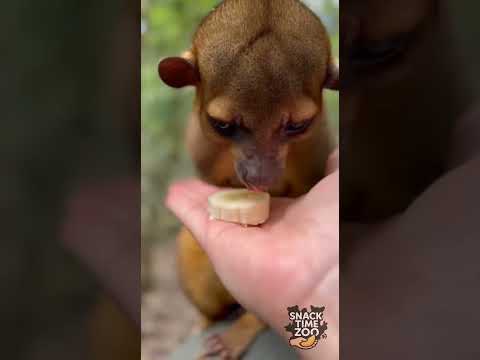
It climbs like a monkey, has a tail that grabs like one, and spends its life in the trees like one — but it is not a monkey at all. The kinkajou is a member of the raccoon family that swapped the forest floor for the rainforest canopy. In our video it is savouring a ripe banana slice, which is exactly the sort of sweet midnight meal it evolved for.
Watch Kinkajou at Snack Time Zoo:
A Raccoon's Cousin in the Canopy
Kinkajous live in the rainforests of Central and South America and belong to the same family as raccoons and coatis. Their round ears, golden-brown fur, and long grabbing tail fooled early scientists into grouping them with monkeys and lemurs. In fact, almost everything about them is a climbing adaptation, from their flexible ankles to their sharp, curved claws.
A Tail That Works as a Fifth Hand
A kinkajou's tail is prehensile, meaning it can grip branches like an extra hand — strong enough to support the animal's whole weight while it dangles and reaches for fruit. Kinkajous can also rotate their hind feet backwards, so the toes point behind them. That party trick lets them run straight down a tree trunk headfirst and reverse direction on a branch without turning around.
The Night Shift Fruit Eater
Kinkajous are nocturnal, sleeping curled in a tree hollow all day and waking at sunset to feed. Fruit is the main course — figs are a favourite — along with flowers, nectar, and the occasional insect or small egg. Their love of sweet things earned them the nickname honey bear, and a treat like a ripe banana slice in our video is right up their alley.
A Tongue That Pollinates Trees
Inside that small head hides a tongue about 13 centimetres long, built for lapping nectar deep inside flowers. As a kinkajou pushes its face into a blossom, pollen sticks to its fur and gets carried to the next tree, making kinkajous quiet pollinators of the rainforest. Because they almost never come down to the ground, many people who share their forest never see one at all.
Quick Summary
The kinkajou (Potos flavus) is a nocturnal, tree-dwelling raccoon relative of Central and South American rainforests — a honey-loving fruit eater whose gripping tail, swivelling feet, and long tongue make it a canopy specialist and pollinator.
Frequently Asked Questions
Is a kinkajou a monkey?
No. Despite its monkey-like climbing and gripping tail, the kinkajou is a member of the raccoon family, more closely related to raccoons and coatis than to any primate.
Why is the kinkajou called the honey bear?
Because of its golden-brown fur and its love of sweet foods, including honey, nectar, and ripe fruit like the banana slice in our video.
What does a kinkajou do with its tail?
The tail is prehensile — it grips branches like a fifth hand and can even hold the kinkajou's full weight while the animal hangs and reaches for food.
When are kinkajous awake?
At night. They sleep curled up in tree hollows during the day and come out after dark to feed, which is one reason they are so rarely seen.